

 Developer(s): Traveller's Tales
Publisher(s): Warner Bros. Interactive Entertainment
Distributor(s): Time Warner
Platform(s): Microsoft Windows, Nintendo DS, Wii, PlayStation 3, PlayStation Portable, Xbox 360
Release date(s): NA June 29, 2010
EU June 25, 2010
AUS June 30, 2010
PlayStation Portable
NA June 29, 2010
EU August 05, 2010
AUS June 30, 2010
Genre(s): Action-adventure
Mode(s): Single-player, Multiplayer
Rating(s): ESRB: E10+
OFLC: G-PG
PEGI: 7+
Media: DVD, Blu-ray Disc, Wii Optical Disc, Nintendo DS Game Card, UMD
Input methods: Keyboard, Gamepad, Wii Remote
Lego Harry Potter: Years 1–4 is a video game in the Lego video game franchise, developed by Traveller's Tales and published by Warner Bros. Released in June 2010, the game is based on the Lego Harry Potter line and its storyline covers the first four books and films of the Harry Potter series: Philosopher's Stone (Sorcerer's Stone in the U.S.); Chamber of Secrets; Prisoner of Azkaban; and Goblet of Fire.
Gameplay
Lego Harry Potter's gameplay is similar to that of most previous Lego games, with an emphasis on collecting and exploring. Casting spells is an integral part of the gameplay, with a wide range of spells available for unlocking as the player progresses. As there are many spells available in the game, you use the spell wheel to select your spell. Potion-making is another integral feature; potions can help the player complete levels or, if created incorrectly, have adverse side effects such as turning the player into a frog.
Changes to the mechanics of previous games include 'Student in Peril' missions, which are a group of challenges to help a student, and Polyjuice Potion, which allows players to temporarily change one of your characters into any other mini-figure unlocked. A major change is to the hub system. The Leaky Cauldron works as a central hub for purchasing unlockable extras and returning to previous levels, while Hogwarts acts as a constantly evolving massive hub with the unlockable characters found by picking up their hidden portraits.
The bigger areas in Hogwarts have led developer Traveller's Tales to improve the overall level design. Also included is another bonus level that allows players to customise the level similar to Lego Indiana Jones 2: The Adventure Continues. If you are lost in-game you can follow a trail of Ghost Studs to the next level. These do not count towards your stud total, but will guide you to the next section of the level. However one of the collectable 'red bricks', found in the courtyard next to herbology, gets the player an 'extra' that makes the ghost studs worth 1,000 each.
Multiplayer Mode
The game employs the two player split-screen technique intro. for Lego Indiana Jones 2: The Adventure Continues, but there is no online support for all consoles.
Changes for the Nintendo DS version
In the Nintendo DS version, several changes were implemented from the versions of the other formats. These include that there is only one hub, the Room of Requirement, but the explorable Hogwarts of the other versions has been removed and both boss battles and spellcasting have been simplified.
PC version
Despite listing the mouse as a recommended/required input method, there is no mouse support in the PC version.
System Requirements for Lego Harry Potter: Years 1–4:
Operating System : Microsoft Windows XP/ Windows Vista/ Windows 7
Processor : Intel Pentium IV at 1.8 GHz / AMD Athlon XP 2200+
Video Card : 128 MB VRAM – NVIDIA GeForce FX 5800 / ATI Radeon HD 1300 Pro
Memory : 256 MB RAM (XP) / 512 MB RAM (Vista / Win 7)
Hard Disk : 4.5 GB of free Hard Drive space
Sound : DirectX 9.0c compatible sound card
Direct X : 9.0c
Controls : Keyboard & Mouse
Installation : DVD-ROM Drive
Plot
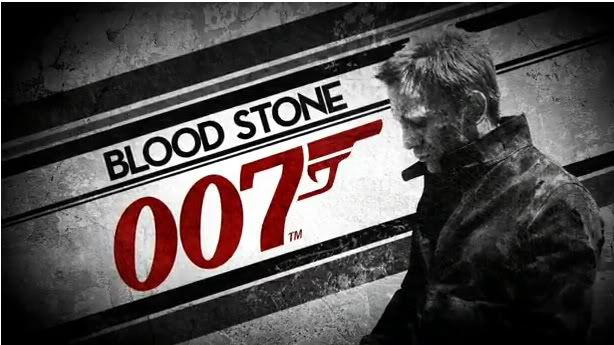
The player assumes the role of the protagonist James Bond (voiced by Daniel Craig) who teams up with wealthy socialite Nicole Hunter (voiced by Joss Stone) to find a researcher who is feared dead. Set across five locations: Athens, Istanbul, Monaco, Siberia and Bangkok, Bond fights the antagonists, a group of terrorists led by a man named Greco. The background of the story is an international conspiracy that has placed the U.K.'s most secretive biochemical weapon into the hands of an unknown enemy. From examination of the website, it is speculated that genetics, globalism, and diamonds will be pivotal themes to the story.
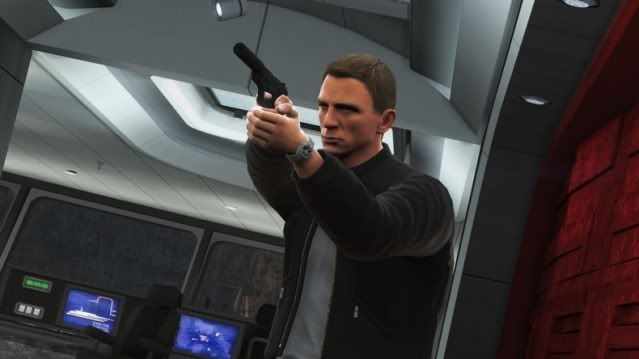
Famed James Bond film writer Bruce Feirstein was chosen to pen the story for the game.
The game itself is built on developer Bizarre Creations' bespoke engine, which was first created for the game "The Club".
Ben Cooke, who is Daniel Craig's stunt double in the films, has provided the motion capture choreography for Bond's digital animation. He is credited as the game's Stunt Coordinator.
Music:
The soundtrack is composed by British composer Richard Jacques. Joss Stone provides an original musical track to the game titled, “I’ll Take It All” written and performed by her and Dave Stewart of the Eurythmics. The song will be featured exclusively in the game.
Last Words:
according to David G. Wilson, Bond Marketing's vice president of business strategy,Blood Stone isn't tied to a James Bond movie but follows an "original and topical storyline". This plot is a "completely new narrative with plot and characters in keeping with Bond heritage" and includes international terrorists, a terrorist suicide mission, and, judging from the title and diamond-encrusted opening credits (in familiar silhouetted Bond intro style), a quantity of jewels.
So lets wait till end of this 2010 to get the game to be released..so that we can try our hands on it. Keep checking this page for more updates.
 Developer(s): Avalanche Software
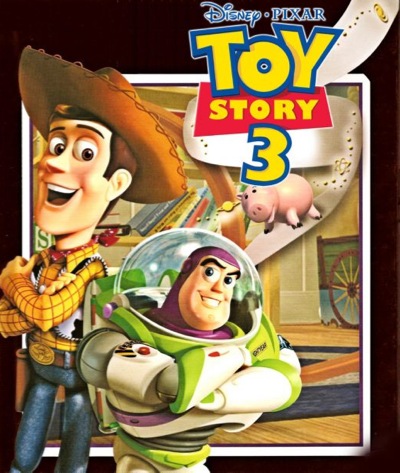
Players can play as Emperor Zurg exclusively in the PS3 version of the game.
Operating System: Microsoft Windows XP / Windows Vista / Windows 7
Processor: Intel Pentium IV at 2.4 GHz / AMD 3000+
Video Card: 128 MB VRAM – DirectX 9.0c compatible with Shader Model 2.0 support (NVIDIA GeForce FX 5600 / ATI Radeon 9600 video card)
Memory: 1 GB RAM
Hard Disk: 6 GB of free Hard Drive space
Sound: 16-bit DirectX 9.0c-compatible sound card
Direct X: 9.0c
Controls: Keyboard & Mouse
Installation: DVD-ROM Drive
 Developer(s): Dimps/Capcom Publisher(s): Capcom
Producer(s): Yoshinori Ono
Designer(s): Hirotoshi Shiozaki Artist(s): Daigo Ikeno
Composer(s): Hideyuki Fukasawa Series: Street Fighter
Platform(s): Arcade, Nintendo 3DS, PlayStation 3, Xbox 360
Release date(s): JP April 28, 2010 NA April 27, 2010 EU April 30, 2010 Arcade JP July/August, 2010 Genre(s): Fighting
Mode(s): Single-player, Competitive multiplayer
Rating(s): BBFC: 12 CERO: B ESRB: T Media: Blu-ray Disc (PlayStation 3) DVD+R DL (Xbox 360)
Input methods: Arcade Stick, Gamepad Cabinet: Stand-up
Arcade system: Taito Type
Super Street Fighter IV includes all the original 25 characters from the home version of Street Fighter IV, as well as ten new characters, all of which are unlocked at the start of the game. After the game's release, Ono also showed interest in making additional characters available in the future as downloadable content (DLC) including Rainbow Mika and Rolento.

The first among the two new characters is Juri, a young South Korean female Taekwondo fighter, who works for Seth's organization, S.I.N. Juri has an energy-boosting device implanted inside her left eye called the "Feng Shui Engine", which provides her with time-warping abilities. The second fighter, Hakan, is a Turkish oil wrestler who seeks to prove that Turkish oil wrestling is the greatest fighting style on earth.
Game modes
The game features a few additional online modes, including Team Battle with up to 8 players, Replay Channel, which allows players to view and save replays from around the world, and Endless Battle, in which the winner plays against a rotating group of up to 8 players. The game also sees the return of the car and barrels bonus stages from Final Fight and the Street Fighter II series, and rival battles, where a dialogue sequence is played when a certain pair of characters face each other. However, survival and time attack mode were removed from the original.
 Developer(s): EA Canada (Xbox 360, PS3), HB Studios (PC, PSP, PS2), Sumo Digital (Nintendo Wii) and Exient Entertainment (Nintendo DS)
Publisher(s): EA Sports
Designer(s): David Rutter (PS3 and Xbox 360)
Kaz Makita (Wii)
Paul Hossack (PS2, PSP, DS, PC, iPhone OS)
Series: FIFA
Aspect ratio: 720p
Version: PASK
Platform(s): PlayStation 3, Xbox 360, Wii, Microsoft Windows, PlayStation 2, Nintendo DS, PSP, iPhone OS, Java ME
Release date(s): AUS 1 October 2009
EU 2 October 2009
NA 20 October 2009
iPhone OS
INT 2 October 2009
Genre(s): Sports
Mode(s): Single-player, Multiplayer
Rating(s): ESRB: Everyone (E)
OFLC: G
PEGI: 3+
Media: Optical disc, all systems except iPhone, mobile phone (download) and Nintendo DS (Game Card)
Input methods: Gamepads, Keyboard, Mouse (menu only), Multitouch (NDS)
EA has released the official system requirements for the PC version of FIFA 10. The football game is scheduled to hit the markets on October 2 (Europe) respectively October 20 (North America) and will be published for several platforms including PC, PS3 and Xbox 360.
The demo of FIFA 10 appeared on Xbox 360, PlayStation3, and PC on 10 September in Europe, on 11 September in Australia, and on 17 September in North America. The playable teams were Chelsea, Barcelona, Juventus, Bayern Munich, Marseille and Chicago Fire. The stadia used in the demo were Wembley Stadium (Xbox 360 version), and FIWC Stadium (PlayStation 3 version). The demo offered friendly matches with half lengths of three real-time minutes. As well as playing a friendly match, the demo allows users to upload created in-game videos and screen-shots to EA Football World. The tagline for the game is "How big can football get?", and "Let's FIFA 10".
FIFA 10 is the second version of the game to sponsor a football club. Along with football magazine FourFourTwo, FIFA 10 is the co-sponsor of English League One club Swindon Town. The FIFA 10 logo appears on the front of the team's away shirt and on the back of the home shirt.[8][9] It is the first FIFA game to do so since FIFA 07, which sponsored Accrington Stanley for the 2007–08 season.
Manager Mode enables the player to take charge of any club in any of FIFA 10's featured leagues.
The Manager Mode has been revamped for FIFA 10, with many previous issues and criticisms addressed. EA has claimed that over 50 key improvements have been made to the PlayStation 3 and Xbox 360 versions.
Changes to gameplay
The "Total Football Experience" is a new feature in which football news from around the Manager Mode world is visible, including player transfers, fixtures and results in foreign leagues. A new "Assistant Manager" can be used to take care of the team's line-up and to rotate the squad based on importance of the upcoming match. For example, if the next match is against a low rated team, he will make sure that players normally on the bench will start the match. Pre-season friendlies have been introduced to the Xbox 360 and PlayStation 3 versions of the game, as a chance to flatten out any wrinkles in a team's lineup before the domestic season begins.
Results for simulated matches are more heavily based on team strength and do not appear to be as "random" as has been the case in the past. This results in more realistic performances and eliminates instances where stronger clubs would be fighting relegation and clubs with weaker players were winning the league. Non-player clubs also now rotate players more often based on factors such as fatigue, player form, and the relative importance of a match, so the lineup for a top team in the early rounds of a domestic cup may consist of less-able and younger players as opposed to a full-strength squad. The names of the "generic" stadiums can be changed in Manager Mode to reflect the name of the player's club's home ground.
Finances
All financial matters are based less on a team sponsor and more on the club's board of directors, who provide two overall budgets: The wage budget, a yearly amount for paying players, and the club budget, for buying and selling players as well as making other improvements to the club. There is a "Board Difficulty" setting, which determines the financial generosity of the board.
The transfer system has been made more authentic, as money is no longer the monopolizing factor in acquiring a player. The acceptance of an offer will be based on factors such as the number of players in your squad in the same position, and the promise of higher-level competition outside the domestic league, such as the Europa League or Champions League. Furthermore, obtaining a player will be more realistically prolonged as other clubs may also attempt to sign the same player. Bids can be submitted for several different players simultaneously, and if the clubs accept, the manager has the choice of which, if any, of the players to ultimately sign.
Players
The "Player Experience and Growth System" has changed. The manual experience growth from FIFA 08 and FIFA 09 has been abolished; player growth will now be determined by in-game performance, demands placed on the player, and achievements based on the player's particular position. There are three categories for gaining experience: "mental", "physical", and "skill". Younger players with higher potential will gain experience much faster, and each player will have an individual growth point, which in turn promises more authentic player growth patterns.
A "Live Season" feature has been implemented within Manager Mode, whereby a player's "form" rises and falls based on performance (within Manager Mode itself rather than real-world events). He will receive a temporarily higher or lower rating along with temporarily higher or lower stats, to reflect this.
Fictional players that are added to Manager Mode by the game itself now have regionalised names, so for example a player from Brazil will not have an English-sounding name.
Virtual Pro
"Virtual Pro" allows the player to create a footballer and take him through the four Be a Pro seasons, include him in the Manager Mode career, use him in Kick off, Tournament, and Lounge mode, as well as using him in the Arena. Game Face has also been added to FIFA 10 as in other EA Sports games, where gamers can create their Game Face on the web at easports.com or easportsfootball.co.uk, then download them into the game. Once a Game Face character is created, he can then be applied to the player in game. Faces can be changed on the web any time. The game face is used as the player's avatar in online play. Players can also grow their players attributes and player traits, celebrations, and kit can be unlocked to make the player realistic and unique. A created player can also be taken online to play with friends in the Fifa Clubs mode.
Fifa in PSP
Stadia
The list of stadia and weather conditions for each one were announced on 27 August 2009. The game features 50 stadiums, including most of the larger stadiums from Europe's most prominent leagues, such as the Allianz Arena, Camp Nou, Emirates Stadium, Anfield, Old Trafford, Stamford Bridge and San Siro, and as well as a range of generic stadia and practice arenas. Real Madrid's Santiago Bernabéu was made available as a free download on launch day. The weather conditions possible in each stadium range from day and night versions of clear to cloudy, rain, or snow.
The stadium names of the generic stadiums can however be changed in a special section of the main menu to reflect the name of the users club's homeground if the user chooses to do so. The capacity of each ground is also listed so that a capacity similar to a club's actual stadium capacity can be chosen to make game experience more authentic.
Ultimate Team
On 1 December 2009, EA Sports announced that the Ultimate Team game mode expansion that was introduced in FIFA 09 would be released in February 2010 for the PlayStation 3 and Xbox 360 versions of the game. Like the previous version, the mode allows for the creation of a custom team based on the collection of various types of cards. The expansion was released on 25 February 2010.[citation needed], and featured new PlayStation Network Trophies and Xbox Live Achievements for FIFA 10. It costs 400 MS Points/$4.99/€4.99/£3.99.
The mode is an update to the Ultimate Team mode from FIFA 09. Users who owned the original Ultimate Team were given two free Gold packs after creating their team, along with a date below the teams name to show the year the team was founded. Like the original, each team is given a full team of players to begin with, along with a stadium, emblem and a home and away kit. New players, staff and items can be purchased from the 6 different pack types available, split into three categories(Gold, Silver and Bronze), or by trading with other users by bidding on cards they are opting to sell, offering them deals or buying them for a specific price. The in-game currency is coins, which are awarded for playing games, playing in tournaments or trading with other users. Bonus coins are awarded for completing different requirements, such as winning a game, being awarded Man of the Match and for possession and passing accuracy. The card packs for Ultimate Team still have basic Bronze Packs (500 coins), Silver Packs (2500 coins) and Gold Packs (5000 Coins), but now also have a bonus pack in each category, called Premium Packs, costing slightly more coins (Bronze cost 750, Silver cost 3250 and Gold cost 7500) but giving 3 rare cards, instead of the 1 given in basic packs.
Like the old Ultimate Team, to keep your players on your squad you must give them contracts. However, unlike last year, players who run out of contracts are rendered unplayable until a contract is applied to them, rather that being removed from your team altogether. Contracts can be found in packs or bought in the trading section. Unlike the old Ultimate Team, players can now store an unlimited amount of players, stadiums, staff members, kits and emblems, to use whenever they need to. The Trading section has also been improved, allowing improved searching and a watch list, to keep track of certain items.
Covers
Each regional version of FIFA 10 features different players on the cover. The United Kingdom and Republic of Ireland covers feature Theo Walcott, Frank Lampard and Wayne Rooney;[ the Australian cover features Wayne Rooney and Tim Cahill, the New Zealand cover features Wayne Rooney and Frank Lampard, the German cover features Bastian Schweinsteiger and Wayne Rooney; the Italian cover features Ronaldinho and Giorgio Chiellini; the French cover features Steve Mandanda, Karim Benzema, and Guillaume Hoarau; the Spanish cover features Karim Benzema and Xavi;[20] the Polish version features Wayne Rooney and Robert Lewandowski; the Portuguese version features Frank Lampard and Simão; the Russian version features Sergei Semak; the Hungarian version features Wayne Rooney and Balázs Dzsudzsák; and the North American version features Frank Lampard, Cuauhtémoc Blanco and Sacha Kljestan.
Leagues
There are 31 leagues and over 500 teams in the game, as well as 41 national teams. New to FIFA 10 is the Russian Premier League, which is not featured in the PlayStation 3 and Xbox 360 versions.[24] Unlike previous versions of FIFA, the Netherlands is included as a fully licensed national team.[25] Due to promotion/relegation and other league expansions, there are 46 teams that were not included in FIFA 09, including 25 that have never appeared in a FIFA game before.[26] The leagues in FIFA 10 are:[27]
* Australia Australia
o A-League
* Austria Austria
o Austrian Bundesliga
* Belgium Belgium
o Belgian First Division
* Brazil Brazil
o Campeonato Brasileiro Série A
* Czech Republic Czech Republic
o 1. Liga
* Denmark Denmark
o Danish Superliga
* England England
o Premier League
o Football League Championship
o Football League One
o Football League Two
* France France
o Ligue 1
o Ligue 2
* Germany Germany
o 1. Bundesliga
o 2. Bundesliga
* Republic of Ireland Rep. of Ireland
o League of Ireland Premier Division
* Italy Italy
o Serie A
o Serie B
* South Korea Korea
o K-League
* Mexico Mexico
o Primera División de México
* Netherlands Netherlands
o Eredivisie
* Norway Norway
o Tippeligaen
* Poland Poland
o Ekstraklasa
* Portugal Portugal
o Portuguese Liga
* Russia Russia
o Russian Premier League[24]
* Scotland Scotland
o Scottish Premier League
* Spain Spain
o Liga BBVA
o Liga Adelante
* Sweden Sweden
o Allsvenskan
* Switzerland Switzerland
o Swiss Super League
* Turkey Turkey
o Süper Lig
* United States United States
o Major League Soccer
Minimal system requirements:
• CPU: 2.4 GHz single-core
• RAM: 512 MiByte (XP) or 1 GiByte (Vista)
• Graphics card: Geforce 6600 or better, Ati Radeon 9800 Pro or better, Support for Shader Model 2.0 or better, DirectX 9.0c
• VRAM: 128 MiByte
• Sound: DirectX 9.0c compatible sound device
• Input: Keyboard or Dual Analog Gamepad
• HDD: 4.4 GB or more, free disc space
• Internet: Broadband Internet connection required for Installation and online gaming
Recommended system requirements
• CPU: 3.2 GHz single-core or 2.4 GHz dual-core
• RAM: 1 GiByte (XP) or 2 GiByte (Vista)
• Graphics card: Geforce 7800 or better, Ati Radeon X1800 or better, Support for Shader Model 2.0 or better, DirectX 9.0c
• VRAM: 256 MiByte
• Sound: DirectX 9.0c compatible sound device
• Input: Keyboard or Dual Analog Gamepad
• HDD: 4.4 GB or more, free disc space
• Internet: Broadband Internet connection required for Installation and online gaming
REVIEW ROUND-UP
Graphics: 4/5 – You wont see a football game look any better.
Sound: 2/5 – Soundtrack is surprisingly bland and boring, commentary is as rubbish as always.
Gameplay: 5/5 – Tons to do plus a improved controls makes the game utterly enjoyable, in fact far more enjoyable than any previous “Fifa”.
Longevity: 4/5 – Tons of modes and things to do, however not 5 out of 5
Overall: 4/5 – I give the game 4 Ronaldo shin kicks out of 5. More of the same greatness that was delivered in “Fifa 2009” with some vastly improved controls, however some big flaws knock the game a little bit.
 Developer(s): Codemasters
Publisher(s): Codemasters
SCEE (PS3/PSP in Europe)
Namco Bandai (Australia)
Engine EGO
Platform(s): Microsoft Windows, PlayStation 3, Wii, Xbox 360, Nintendo DS, PlayStation Portable
Release date(s): Console versions
NA 8 September 2009
EU 10 September 2009
UK 11 September 2009
Microsoft Windows
NA 1 December 2009
EU 3 December 2009
UK 4 December 2009
Genre(s): Racing
Mode(s): Single-player, Multi player
Rating(s): ESRB: T (X360, PS3, Win), E10+ (Wii, PSP), E (DS)
Media: Blu-ray Disc, DVD, Wii Optical Disc, UMD, Steam.
Input methods: Keyboard & Mouse, Gamepad
Melding turbo-charged off-roading with extreme sports attitude, DiRT 2 takes off-road racing to a new level, with thrilling new race types, big event atmosphere, stunning locations, a new breed of off-roading heroes and feature a line-up of super-charged licensed speed machines covering seven vehicle classes.
Turbo-charged off-roading with extreme sports attitude: DiRT 2 has more attitude, more adrenaline and more DiRT than ever – off-roading just got cool.
Take it on Tour: DiRT 2 will take players on a World Tour to compete in aggressive multi-car and intense solo race events in the most diverse and challenging real-world environments.
Love your ride: Embark on a game-long love affair with your favourite cars. Rather than being forced through a checklist of in-game cars, DiRT2 enables players to pick their favourite rides and drive them across multiple disciplines.
The complete off-road online package: DiRT 2 invites players to become part of an extreme sports community, with full online multiplayer race events and community integration across multiple disciplines.
Gameplay:
Colin McRae: Dirt 2 features five racing disciplines, all of which are playable offline (against AI bots when applicable) and online. In addition, three 'special modes' are included. Colin McRae: Dirt 2 runs on an updated version of the EGO engine, which powered Codemasters' Race Driver: Grid as well. The engine features, most notably, an updated physics engine, which models realistic weight transfer during turning maneuvers, allowing the player to incorporate advanced driving techniques, such as the Scandinavian flick.
Rally racing occurs on non-circuit roads which usually involve public (closed) routes and technically challenging courses. Usually involving staggered starts, each driver competes against the clock. In addition, during rally events, a co-driver is present, constantly reading pacenotes to guide the driver along narrow and meandering tracks of up to 6 km in length.
Rallycross races involve cars identical to those used in rally events; the races themselves, however, are completely opposite. Each rally-cross race involves up to eight racers competing in multiple lap events on circuit tracks of mixed surface type. The tracks, half tarmac and half dirt, exist in closed settings, such as in or around stadiums, and are approximately 1 to 1.5 km in length.
The most similar real-world equivalent of Trailblazer events are hill climbs. Unlike hill climb events, however, trailblazer races do not require a positive change in elevation. Similar to rallying, trailblazing features staggered starts. Trailblazer (and hill climb) cars, unlike rally cars, usually feature massive aerodynamic aids, such as spoilers, diffusers, and splitters to help keep traction at higher speeds, regardless of track surface or conditions.
Raid races are multi-car events involving heavyweight vehicles, such as buggies and trophy trucks. Each race begins with a simultaneous start of up to eight competitors, with tracks averaging 5 km in length.
Landrush events are similar to raid races, but take place on a circuit. Each event features eight racers on a dirt track of about 1 km, and involve multiple laps.
Special Modes
In addition to the five straight game types, there are three special variants, each applicable to multiple modes.
Gatecrasher, which uses Rally courses and cars, involves smashing yellow barriers; competitors race against the clock. When smashed, the 'gates,' strategically placed along the best racing line, add time to the clock; whichever racer finishes the event with the most time on the clock wins. The format of the race is more similar to a multi-competitor time trial than to a traditional rally race.
Domination, playable Rallycross and Land Rush stages, involves multiple drivers competing to set the lowest time in any given track sector. Points are awarded based on the final number of controlled sectors, as well as the final race position.
Last Man Standing is an elimination-style race, during which the driver in last place is eliminated in an 20-second interval.
Multiplayer:
Colin McRae: Dirt 2 features a set of multiplayer modes which the user can partake in over, the PlayStation Network, Windows Live and Xbox Live as well as local multiplayer. Up to eight players can compete in ranked (Pro Tour) or unranked matches (Jam Session). Within the 'Jam Session' category, any class of cars may be used on any track; the game lets hosts know when a combination is not necessarily advisable, such as Trailblazer cars on a Rallycross circuit. Ranked matches are, by comparison, much more restrained; only the prescribed cars may be used on a track.
Minimum Specifications:
OS: Microsoft Windows XP, Vista or Windows 7
Processor: Intel Pentium 4 3.0Ghz, AMD Athlon 64 3400+
Memory: 1GB (2GB for Windows Vista)
HD Space: 10GB
Video Card: ATI Radeon X1500, NVIDIA GeForce 6800
Recommended Specifications:
Enhanced for DirectX 11
OS: Microsoft Windows XP, Vista or Windows 7
Processor: Intel Core i7 or AMD Phenom II
Memory: 3GB
HD Space: 10GB
Video Card: ATi Radeon HD 5700 Series
 Developer(s): Ubisoft Montreal, Ubisoft Quebec, Ubisoft Singapore, Ubisoft Casablanca
Publisher(s): Ubisoft
Composer(s): Xbox 360, PlayStation 3,
PC: Steve Jablonsky
Wii, DS, PSP: Tom Salta
Series: Prince of Persia
Engine: Anvil / Jade
Platform(s): PlayStation 3, Xbox 360, Microsoft Windows, Nintendo DS, PlayStation Portable, Java ME
Release date(s): Xbox 360, PlayStation 3, Nintendo DS, PlayStation Portable:
NA May 18, 2010
EU May 20, 2010
Microsoft Windows:
NA June 12, 2010
EU June 12, 2010
Genre(s): Action-adventure
Mode(s): Single-player
Rating(s): BBFC: 12
ESRB: T
Input methods: Keyboard and mouse, Gamepad
Ubisoft takes us back with a classic Sands of Time adventure, but is it a welcome return or would you be better off suffering the charmless heroics of Jake Gyllenhaal?
Déjà vu is a word of few definitions, both personal and formally. It can strike emotions of dullness, the sheer repetitiveness of life grinding even the best of us down to mere dust. The other is blissful return, the feeling of “coming home” as it were.
Prince of Persia: The Forgotten Sands falls right in the centre of these two polar extremes. You feel euphoric for the return of the original Sands of Time formula many have cried out for, but only to a certain extent. And anybody looking for the much more fantastical, falteringly simplistic 2008 rebirth won’t find it here. This game harkens back to the originals of the PlayStation 2 era: a linear yet free-form experience.
The storyline follows a similar pattern to Sands of Time: The Prince finds a power that cannot be harnessed, attempts to utilise said power, cocks it up. The key focus here is puzzles and platforming. This is where the game both succeeds and falters. Not much has changed from the original iterations. The success of this being that we have control and gameplay of the utmost fluidity, a true joy to control… all except for the camera. The fixed camera angles sometimes prove problematic for the player, hiding death drops just off-shot.
However, ignore these niggles, and the game works well. It’s was the human connection between you and the game that hit home with Sands of Time. The initiative learnt as you progress – not once forced upon the player, all done without ever realising – is the beauty of the gameplay. This time round it’s not such a grand surprise, but the fact it’s there is a pleasant addition.
New additions to the formula are what keep Forgotten Sands fresh, if only for a limited time. Water puzzles, where you have to stop time to use gushing drains of water as platforms and handholds is interesting the first time around. Same as combat with 15+ enemies is a good concept for the first battle. Yes, the game has harkened back to a game that I adore. But it’s has not done away with the biggest graft I had with Sands of Time, that it’s just so damn repetitive.
You finally get into a set structure of free running, fighting, free running, puzzle solving, boss fighting, free running. I’m not saying it’s a bad formula. It’s just done to death in The Forgotten Sands.
Mix this with mediocre graphics and sound design and tunnel vision can ensue. Ubisoft have gone straight for mid-section presentation values. Character animation is good, but the environments are washed out. Same for the sound design. Combat sounds are decisively meaty, but the voice acting is sometimes obnoxious and forced.
I was quite lost on putting a final opinion to this. And through feeling, it was easy to deduct what it was. Prince of Persia: The Forgotten Sands is a forgettable piece of entertainment. It ticks all the boxes that Sands of Time fans craved, but is that really all we wanted? The true definition of a summer release: here today, gone tomorrow.
Minimum System Requirements for PC Game:
OS: Windows XP, Vista or Windows 7
CPU: Intel Pentium D @ 2.6 Ghz / AMD Athlon 64 X2 3800+
RAM: 1 GB
HDD: 8 GB free disk space
Graphics: 256 MB Graphics Memory
Sound Card: DirectX 9 Compatible
DirectX: Version 9.0c
Network: 128 kbps Broadband Internet Connection
Recommended System Requirements for PC Game:
OS: Windows XP, Vista or Windows 7
CPU: Intel Core 2 Duo @ 2.66Ghz / AMD Athlon 64 X2 4600+
RAM: 2 GB
HDD: 8 GB free disk space
Graphics: 512 MB Graphics Memory
Sound Card: DirectX 9 Compatible
DirectX: Version 9.0c
Supported Graphics Cards:
NVIDIA GeForce 6800 / 7 / 8 / 9 / 100 / 200 / GTX series
ATI RADEON X1600 / HD 2000 / HD 3000 / HD 4000 / HD 5000 series
Laptop versions of these cards may work but are NOT supported.