.

.
Loading...
Showing posts with label Xbox 360. Show all posts

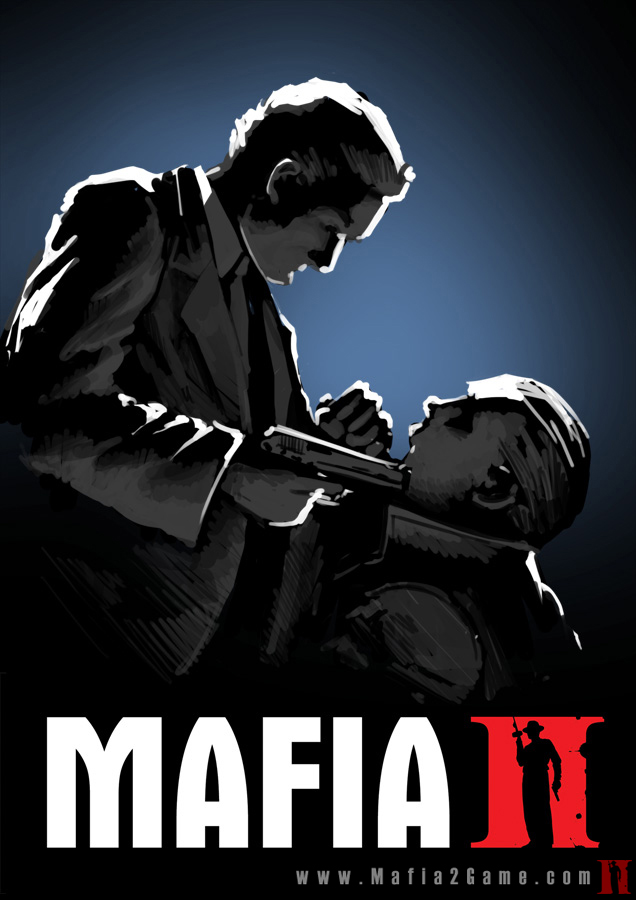
Mafia II

Posted by GameIsLyf Monday, August 30, 2010 0 comments


Developer(s): 2K Czech
Massive Bear Studios (PS3)
Publisher(s): 2K Games 1C
Designer(s): Lead Designer
Daniel Vávra
Pavel Brzák
Writer(s): Daniel Vávra
Platform(s): Microsoft Windows, PlayStation 3, Xbox 360, OnLive
Release date(s): NA 24 August 2010
AUS 26 August 2010
EU 27 August 2010
Genre(s): Third-person shooter, action-adventure
Mode(s): Single-player
Rating(s): BBFC: 18
ESRB: M
OFLC: MA15+
Media: Blu-ray Disc, DVD, download

Mafia II is a third-person action-adventure video game, the sequel to Mafia: The City of Lost Heaven. It is developed by 2K Czech, previously known as Illusion Softworks, and is published by 2K Games. Originally announced in August 2007 at the Leipzig Games Convention, it was released on PlayStation 3, Xbox 360 and Microsoft Windows in August 2010.

Gameplay

The game is set from 1943 to 1951 in Empire Bay (the name is a reference to New York's state nickname "The Empire State"), a fictional city based on San Francisco and New York City, with influences from Chicago and Detroit. The game features a completely open-ended game map of 10 square miles. No restrictions are included from the start of the game. There are around 50 vehicles in the game, as well as licensed music from the era.

Many firearms from the previous return, such as the Thompson submachine gun, the Colt 1911 and a pump-action shotgun. As seen in screenshots, new WWII-era weapons like the MP 40, the M3 submachine gun, and the Beretta Model 38 also appearance in the game as well as the MG 42.

Interacting with objects in the environment involves two action buttons- a standard action and a "violent" action (for example, when stealing a car, the player may choose to either pick its lock or break the window glass), used in context-sensitive situations. A map is included as in the original Mafia game. The checkpoint system has been completely overhauled. New controls include a cover system that allows the player to hide behind objects (such as generators, walls and large crates) to shoot enemies, rather than just using a crouch while behind an object.

It has been stated by 2K Czech that the game's cutscenes are created by the game engine, in real-time, rather than pre-rendered cutscenes.

Synopsis

Mafia II is a gritty drama which chronicles the rise of World War II veteran Vito Scaletta, the son of Sicilian immigrants. As the game progresses, Vito will join the Falcone Crime Family and become a made man. There are 15 chapters in the game, connected into one storyline.


PlayStation 3 version controversy

The PlayStation 3 version became subject to controversy on 2K's Mafia II forums when 2K's interactive marketing manager Elizabeth Tobey stated that the PlayStation 3 version would be missing certain features that were present in the PC and Xbox 360 versions including three dimensional grass, pools of blood forming under dead bodies and realistic cloth physics. These features were said to be present in earlier builds of the game, but had to be removed to increase the game's frame rate.

Upon release the PS3 version received the same or higher review scores than the Xbox version from Destructoid and Nowgamer (sites that review the game on multiple platforms rather than the normal practice of reviewing a single platform). and also the Metacritic rating places both version on the same score of 74/100. although the GameRankings review aggregator has the Xbox version 4 points ahead of the PS3 version.

Reference to Mafia: The City of Lost Heaven

In the original game the main protagonist Thomas Angelo is shown to be gunned down at the end of the game in front of his house. It is revealed in Chapter 14: Stairway to Heaven in Mafia 2 that Vito and Joe are the two who "whack" him. This is further proven by the use of the exact same red car in both cases and nearly identical cut scenes.

Minimum system requirements

Operating System: Windows XP SP2/Vista/7
CPU: Intel Pentium D 3 GHz or AMD Athlon 64 X2 3600+ (Dual Core) or higher
Memory: 1.5 GB
Hard Drive Space: 8 GB of free space
Graphics Hardware: Nvidia 8600 / ATI Radeon HD 2600
Sound Hardware: DirectX 9.0c


Recommended system requirements

Operating System: Windows XP SP2/Vista/7
CPU: Intel Quad Core 2 Quad 2.4 GHz
Memory: 2.0 GB
Hard Drive Space: 10 GB of free space
Graphics Hardware: Nvidia GeForce 9800 GTX / ATI 3870
Sound Hardware: DirectX 9.0c

Network: Internet connection required for online activation

Lara Croft and the Guardian of Light

Posted by GameIsLyf Tuesday, August 17, 2010 0 comments

Developer(s): Crystal Dynamics
Publisher(s): Square Enix
Director(s): Daniel Neuberger
Series: Tomb Raider
Platform(s): PlayStation Network, Xbox Live Arcade, Microsoft Windows
Release date(s): August 18, 2010[show]
Xbox 360 (Arcade)
August 18, 2010
PlayStation 3 (PSN)
September 28, 2010
PC (Steam)
September 28, 2010
Genre(s): Isometric platform, Action
Mode(s): Two-player co-op, Single-player
Rating(s): ESRB: T
Media: digital download

Lara Croft and the Guardian of Light is an upcoming isometric platform action video game developed by Crystal Dynamics and published by Square Enix for the PC, PlayStation Network and Xbox Live Arcade as part of the Tomb Raider series for digital download. Unlike previous games in the series, the game does not carry the Tomb Raider brand and will have a heavy emphasis on cooperative gameplay, both online or locally.

In the multiplayer, players will take the role as either Lara Croft or a 2,000 year old Mayan warrior named Totec. They will have to work together in order to stop the evil spirit Xolotl and retrieve the Mirror of Smoke. A single-player campaign mode will be available that will not include the non-playable character AI following or helping Lara. Guardian of Light will use the same game engine as Tomb Raider: Underworld, and will include modern visuals and physics. The video game was shown at E3 2010 on 14 June and will be released for the Xbox Live Arcade on 18 August 2010, but online co-op gameplay will not be enabled until 28 September, the day of the PC and PlayStation Network release.


Gameplay
The game will be a departure from the main series as being a third person adventure game. Instead it will be a non-linear "arcade-inspired" action game played from an isometric viewpoint using a fixed camera. The game also features cooperative gameplay, and players will take control of either Lara or an ancient Mayan tribesman named Totec. Each playable character will possess unique weapons and skills. Lara will retain her dual pistols with infinite ammo and a grappling hook. She will be able to use her grappling hook to make it across difficult gaps and Totec can ride along. Totec will carry spears which can be used as a weapon and on the environment. Both characters will carry unlimited "bombs" that can be dropped and detonated with a press of a button.

Tombs can be explored and some will have "booby-trap puzzles" to solve. The game will not have any loading times.

Guardian of Light may be played with a single player, and a second player may join at any time, whether online or locally. In the single-player campaign the only playable character is Lara; Totec will not be available to assist. Lara will have all the tools required along with new abilities to make it through her own unique adventure. The puzzles and bits of the map will also be different. Creative director Daniel Neuberger said that this was because he did not want the player to get frustrated by having to rely on AI. The campaign will reportedly feature up to eight to ten hours of gameplay.


Multiplayer
In multiplayer, teamwork will have a heavy emphasis on gameplay. Lara will be able to use Totec's shield as a portable platform as he holds it above his head to make it a difficult height. She may balance on a stack spears that Totec throws in the wall; the spears will not be able to hold Totec's weight. Totec can tightrope walk using Lara's grappling rope. As the game progresses, Totec will learn from Lara how to use modern weapons, such as rifles. When enemies are killed, point scores will appear above their bodies—red or blue—depending on whether Lara or Totec did the damage. There will also be pick-ups, such as gems, scattered throughout the levels that will increase the player's score. Receiving high scores in each level will reward the player with unlockables. To add competitiveness into the game there will only be a limited number of enemies and gems in the world so the player must beat their partner to kill and grab them all. The multiplayer mode will reportedly feature up to six to eight hours of gameplay, depending on teamwork.

Characters
Guardian of Light will star Lara Croft, a fictional English archaeologist and Totec, an ancient Maya warrior and leader of the Army of Light. Both will be playable characters. An evil spirit called Xolotl will be the antagonist. Some of his minions that he makes come to life will include: giant spiders, demon like creatures, and huge trolls. Lara will again be voiced by Keeley Hawes and Totec, Lara's partner, is newly voiced by Jim Cummings.

Minimum System Requirements:
Operating System : Microsoft Windows XP / Windows Vista / Windows 7
Processor : Intel Pentium IV at 3.0 GHz / AMD at 2.5 GHz
Video Card : 128 MB VRAM – NVIDIA GeForce 6800GT or better / ATI Radeon 1300XT or better
Memory : 1 GB RAM (XP) / 2 GB RAM (Vista)
Hard Disk : 7 GB of free Hard Drive space
Sound : DirectX 9.0c compatible sound card and drivers
DirectX : 9.0c
Controls : Keyboard & Mouse
Installation : DVD-ROM Drive

Recommended System Requirements:

Intel Processor: Core 2 Duo E6600 2.4GHz
AMD Processor: Athlon 64 X2 Dual Core 5200+
Nvidia Graphics Card: GeForce 7950 GT
ATI Graphics Card: Radeon X1800 Series 256MB
RAM Memory: 2 GB
Hard Disk Space: 7 GB
Direct X: 9

Developer(s): Konami
Publisher(s): Konami
Designer(s): Koji Igarashi (producer)
Kozima Yoshihumi (artist)
Series: Castlevania
Platform(s): Xbox Live Arcade
Release date(s): August 4, 2010
Genre(s): Action-adventure game
Mode(s): Single-player, Multiplayer
Rating(s): CERO: B
ESRB: T
OFLC: M
PEGI: 12+

Castlevania: Harmony of Despair is a 2D action-adventure game for the Xbox Live Arcade. The game features a new map system that allows players to see the current quest map's entire setup, as well as up to six players at once over Xbox Live. The game was first leaked as an OFLCA Rating on May 27, 2010, then officially announced for Xbox Live Summer of Gaming 2010. Later in the year, the game was unveiled as a playable demo in the Konami booth at the E3 Convention of 2010. It was released on August 4, 2010.

Pointed out by 1up.com, Castlevania: Harmony of Despair may be released on Sony's PlayStation Network if the game sells well on Microsoft's Xbox Live Arcade.


Gameplay
Gameplay includes a Co-Op mode, which plays like previous 2D Castlevania game's "Boss Rush Mode", but with several rooms and items to find, culminating in a boss to fight. It also includs a Versus Mode, with battle occurring between players. Some bosses are able to attack players on their way to the fight.

The game features playable characters such as Alucard, Soma Cruz, Jonathan Morris, Shanoa and Charlotte Aulin, all from previous 2D Castlevania games.

All of the characters include eight palette swaps to accommodate players that wish to be the same character. They will be joined by other characters through downloadable content, when released. The characters have their own signature attacks and skills to use in battle. An all-new map system allows real-time zooming in and out of the current stage, which will not stop gameplay and even allow players to play with the map zoomed out. The game can also be played in high definition (alluding to the initials of the title: Castlevania HD.) Other features in the game include a Book placed in certain parts of a level, which is the only way to change items and equipment mid-game. Consumable items such as potions, however, will be scrolled through and consumed using specified buttons on the controller. Also, the experience point system from most newer 2D Castlevania games has been taken out, reducing players to finding weapons and equipment as the only means of assisting the character, and levelling up sub-weapons and spells as a means of character growth.

Even that might be acceptable if the journey through each castle were more exciting. It's a trudge, though. One of the first things I noticed about Harmony of Despair was that regardless of which character I chose - players are given a choice of five Castlevania luminaries including Alucard and Soma Cruz - my hero was in no hurry to get anywhere. I bent that analogue stick as far as I could, and yet the little sprite wouldn't speed up. My high school running coach used to make us do a strength drill where we ran laps in six inches of water; that's what it feels like to move around in this game.

Monday Night Combat

Posted by GameIsLyf Sunday, August 15, 2010 0 comments

Developer(s): Uber Entertainment
Publisher(s): Microsoft Games Studios
Platform(s): Xbox 360
Release date(s): August 11, 2010
Genre(s): Third-person shooter
Mode(s): Single-player, co-op (2-player splitscreen, 2-4 online), online multiplayer: (6 vs 6)
Rating(s): ESRB: T
Media: Download

Monday Night Combat is a downloadable third-person shooter video game exclusive to the Xbox Live Arcade developed by Uber Entertainment.

Premise
Set in the future, two teams of cloned soldiers battle to destroy the other team's 'Money Ball' as a competitive sport.

Gameplay

The game blends third person shooting with classes in the style of Team Fortress 2 with team-based objectives in the style of Defense of the Ancients and similar games.

There are 2 Gametypes available

Crossfire:
Teams of six battle each other to destroy the others Moneyball. To do so they must make sure their robots get to the other team's money ball. Only the robots can damage the money ball at first by damaging their shield but after the sheilds are down all players can also contribute.

Blitz:
Is where 4 players protect their moneyball against waves of robots. This gametype can also be played alone, 2 player splitscreen or 4 player online.

Bullseye The Mascot
Bullseye, the mascot of Monday Night Combat, is a randomly chosen super fan that can be found in the middle of the arena dancing and moving around. When he appears, players can attack him to make him drop money, which they can then pick up and use for skills, turrets, bots, jump pads, etc.

Bacon
Bacon is sometimes dropped when attacking Bullseye the mascot or destroying a JackBot. When the bacon is collected, the player will be able to run faster and shoot farther. They will also do more damage and have a larger clip. These effects continue until the player dies and is re-spawned or the game is over.


Character classes:

Each of the six classes has two weapons equipped as well as four skills, one of which is passive.

Assault
A standard shooter class, equipped with assault rifle and grenade launcher, adept as named at pushing the assault

Skills:

* F.L.Y, a jetpack which allows the assault to move horizontally in the air for a set length.
* Jet Charge, attack like a rugby tackle.
* a remote detonation explosive.

Tank
Wielding a 'Jet Engine Gun' (firing a stream of heat like a superpowered flamethrower) and a laser railgun, this class has the highest all out attack power

Skills:

* Jet Charge, a ramming attack that can knock enemies down.
* Stun Grenade that can be upgraded into a Product Bomb to distract players and stun robots and turrets.
* Plant, the ability to entrench Himself like the Gunner

Sniper
With the eponymous sniper rifle and a submachine gun

Skills:

* Flak
* Traps
* Grapple

Upgrades

* Supa Sniper: Allows the Sniper Rifle to shoot through multiple enemies.

Support
Sporting a Heal/Hurt Gun (A gun that heals bots turrets and pros, and whose secondary function drains health from opposing bots turrets and pros) and a shotgun, this class both heals and places defensive turrets

Skills:

* Hack, hack turrets to increase there distance and damage. The hack can also be used to turn hostile turrets friendly at level 2+.
* FireBase, A mini turret. (on the highest level regenerates your health when you stand close to it)
* Strike, Throws an airstrike beacon. A series of bombs will strike the area targeted by the airstrike beacon.

Gunner
Equipped with a massive minigun and secondary mortars

Skills:

* Slamma, a ground stomp inducing a blast wave that can stun enemies
* Grabbing enemies and bashing them face first into the ground
* Plant, the ability to entrench and become a human turret

Assassin
With a dagger and shurikens.

Skills:

* Sprint, The ability to run really fast for short periods of time
* Cloak, The ability to be invisible for short periods of time
* Smoke Bomb, a bomb that provides cover and stuns enemies while greatly increasing the Assassin's jump height for a very short time


Upgrades

* Katana: upgrade for the dagger

Hydro Thunder Hurricane

Posted by GameIsLyf Wednesday, July 28, 2010 0 comments

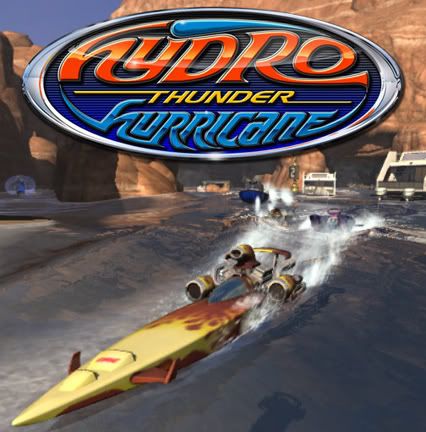
Hydro Thunder Hurricane is racing game.Remember Yaris for Xbox Live Arcade? No? Good. It was undeniably the low point for downloadable racing games on Xbox 360. Finally XBLA gets something to wash the taste from your mouth for good: Hydro Thunder Hurricane. Upstart developer Vector Unit didn't actually start out making a Hydro Thunder title, but Microsoft liked what it saw, licensed the rights to HT and made the decision to resurrect the franchise.

For the uninitiated, Hydro Thunder was an arcade game from the late nineties that drew in crowds with its transforming, jet-powered speedboats and courses that felt inspired by amusement park thrill rides. Hydro Thunder Hurricane doesn't deviate from that blueprint, and while gaming hardware has changed, fun hasn't. And Vector Unit was clearly keeping that at the forefront in designing Hurricane.


Powerboat racers are, in this day and age, not particularly plentiful, so you are a little rusty for your first couple of races, but the variety of boats and their noticeable handling differences helped you get your sea legs back pretty quick. Before long you are thundering through the likes of Asgard, a monster-filled island, and Tsunami Bowl, a wild, man-made venue that's built purely for speed.

once you re-familiarized yourself with the basic gameplay (including the ever-important collecting and using of boost, and boost jumping) you are having a blast. The tracks are white-knuckle rides, brimming with their own personality, dynamic set pieces and particular challenges, not to mention a wealth of shortcuts.

You really like the point system that's used in unlocking more courses, boats, paint jobs and challenges. It's very much like the one used by Split/Second, one of your favorite modern racers. Points are awarded for landing in the top three of each race, and the races can be re-entered to earn more (and, if necessary, place higher). There's something really satisfying about checking the post-race results, watching the points get tallied and seeing various unlocks pop up on screen, even when you don't take gold. It's a nigh-constant stream of gratification in Hurricane.


At the same time, You can't really draw a comparison to the full-price, big-budget likes of Split/Second when talking about the visuals. Don't get us wrong. It's not a bad looking game, it's just not at the head of the pack. It's fast and vibrant, but the water is an undeniably important part of a boat racing game could have looked a lot more realistic given the 360's capabilities, ditto for the lighting.

On offer apart from the single races are the speed and precision of Ringmaster, which challenges the players. As its name suggests race through rings, and Gauntlet, which litters the course with exploding barrels that have to be avoided. Lumped together with Tournament modes that collect several smaller events, they make for fun additions that definitely give Hurricane staying power, especially with leaderboard junkies.


But it's when racing against other opponents that the experience is at its best, riding in their wakes to "draft" them and boost jumping over them. The AI competitors offer a decent challenge, although more than a few times you caught them getting lost in more wide-open sections of some courses. Funny enough, these were spots where you would also gotten stuck, so maybe they're more human than most computer-controlled opponents. Not-so-funny: The announcer / co-pilot who's devoid of any genuine enthusiasm and just will not shut up about the fact that you really, truly should use your boost. The online experience , which includes straight-up races and a team-based "Rubber Duck" mode, in which two players are said duckies and the other racers are out to stop 'em seems to be about what you'd expect (our ability to test them was limited, this being pre-release code and all).

This is a great, content-rich title that truly puts the "arcade" in Xbox Live Arcade. There are better retail racers, but Hydro Thunder Hurricane is a dynamite download.

Lego Harry Potter: Years 1–4

Posted by GameIsLyf Tuesday, July 27, 2010 0 comments

Developer(s): Traveller's Tales
Publisher(s): Warner Bros. Interactive Entertainment
Distributor(s): Time Warner
Platform(s): Microsoft Windows, Nintendo DS, Wii, PlayStation 3, PlayStation Portable, Xbox 360
Release date(s): NA June 29, 2010
EU June 25, 2010
AUS June 30, 2010
PlayStation Portable
NA June 29, 2010
EU August 05, 2010
AUS June 30, 2010
Genre(s): Action-adventure
Mode(s): Single-player, Multiplayer
Rating(s): ESRB: E10+
OFLC: G-PG
PEGI: 7+
Media: DVD, Blu-ray Disc, Wii Optical Disc, Nintendo DS Game Card, UMD
Input methods: Keyboard, Gamepad, Wii Remote


Lego Harry Potter: Years 1–4 is a video game in the Lego video game franchise, developed by Traveller's Tales and published by Warner Bros. Released in June 2010, the game is based on the Lego Harry Potter line and its storyline covers the first four books and films of the Harry Potter series: Philosopher's Stone (Sorcerer's Stone in the U.S.); Chamber of Secrets; Prisoner of Azkaban; and Goblet of Fire.

Gameplay
Lego Harry Potter's gameplay is similar to that of most previous Lego games, with an emphasis on collecting and exploring. Casting spells is an integral part of the gameplay, with a wide range of spells available for unlocking as the player progresses. As there are many spells available in the game, you use the spell wheel to select your spell. Potion-making is another integral feature; potions can help the player complete levels or, if created incorrectly, have adverse side effects such as turning the player into a frog.

Changes to the mechanics of previous games include 'Student in Peril' missions, which are a group of challenges to help a student, and Polyjuice Potion, which allows players to temporarily change one of your characters into any other mini-figure unlocked. A major change is to the hub system. The Leaky Cauldron works as a central hub for purchasing unlockable extras and returning to previous levels, while Hogwarts acts as a constantly evolving massive hub with the unlockable characters found by picking up their hidden portraits.

The bigger areas in Hogwarts have led developer Traveller's Tales to improve the overall level design. Also included is another bonus level that allows players to customise the level similar to Lego Indiana Jones 2: The Adventure Continues. If you are lost in-game you can follow a trail of Ghost Studs to the next level. These do not count towards your stud total, but will guide you to the next section of the level. However one of the collectable 'red bricks', found in the courtyard next to herbology, gets the player an 'extra' that makes the ghost studs worth 1,000 each.

Multiplayer Mode
The game employs the two player split-screen technique intro. for Lego Indiana Jones 2: The Adventure Continues, but there is no online support for all consoles.

Changes for the Nintendo DS version
In the Nintendo DS version, several changes were implemented from the versions of the other formats. These include that there is only one hub, the Room of Requirement, but the explorable Hogwarts of the other versions has been removed and both boss battles and spellcasting have been simplified.

PC version
Despite listing the mouse as a recommended/required input method, there is no mouse support in the PC version.

System Requirements for Lego Harry Potter: Years 1–4:
Operating System : Microsoft Windows XP/ Windows Vista/ Windows 7
Processor : Intel Pentium IV at 1.8 GHz / AMD Athlon XP 2200+
Video Card : 128 MB VRAM – NVIDIA GeForce FX 5800 / ATI Radeon HD 1300 Pro
Memory : 256 MB RAM (XP) / 512 MB RAM (Vista / Win 7)
Hard Disk : 4.5 GB of free Hard Drive space
Sound : DirectX 9.0c compatible sound card
Direct X : 9.0c
Controls : Keyboard & Mouse
Installation : DVD-ROM Drive

Fable III

Posted by GameIsLyf Sunday, July 25, 2010 0 comments

Developer(s): Lionhead Studios

Publisher(s): Microsoft Game Studios

Designer(s): Peter Molyneux
Series: Fable
Platform(s): Xbox 360, Windows
Release date(s):October 26, 2010
Genre(s): Action RPG, sandbox
Mode(s): Single-player, cooperative, Strategic life-simulation game
Media: DVD-DL
Input methods:Gamepad, keyboard,
Kinect and mouse

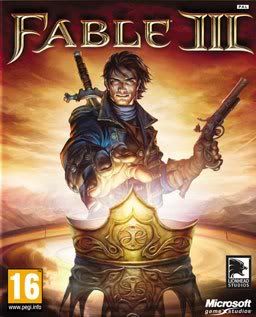
Fable III is the third game in the Fable series is action role-playing games developed by Lionhead Studios and published by Microsoft Game Studios and is the sequel to Fable 2. It is scheduled to be released on October 26th, 2010 for Xbox 360 and Microsoft Windows.
At Game Developer Conference 2010 it was announced that John Cleese would be playing the Butler called Jasper,Stephen Fry is also confirmed to be returning to voice the character of Reaver, Jonathan Ross is starring as a currently unrevealed role, Michael Fassbender is confirmed to voice Logan, and Academy Award winner Sir Ben Kingsley will also feature as the King of Mist Peak‎ with Bernard Hill as Sir Walter Beck. Also Zoë Wanamaker will return to the role of Theresa and Simon Pegg will voice act as an unrevealed role.

Plot:

Set fifty years after the events of Fable II, the continent of Albion, where the Fable series is set, is under the control of Logan, a tyrant king and the Hero's older brother. The player's character, the "Hero", is forced into a quest to become a revolutionary leader to defeat the king after an "injustice" happens to their parent, believed to be at the hands of the tyrant. Over the course of the first half of the game, the Hero will overthrow Logan and become ruler of Albion himself. During the second half of the game, a foreign nation, believed to be called Aurora, will threaten Albion and the player has to decide how to react to it.

Gameplay:

There are rewards for being a self-serving ruler, including a treasury filled with gold piles that grow or diminish based on the player's wealth. The player's in-game family will attempt to pressure the player into selfishly taking money from Albion to maintain and upgrade his or her castle.
The player is also tasked with dealing with how his society works on a day-to-day basis, such as how to handle crime, poverty, and taxation. Another example is the choice to go to war. While Albion is only a single continent in a much-larger world, Fable III is the first game in the series to expand the playable areas beyond Albion's borders.
Like the character-morphing that defines the series, where the player's character changes appearance based on his or her actions, growing beautiful or ugly based on good and evil actions respectively, Fable III expands that to location-morphing. If the player taxes a region heavily, the people will become visibly poorer, their buildings will start to fall into disrepair and the player will encounter hostility from them if he passes through the area. The player's melee weapon will change with use, as well as the player's ranged and magic gauntlets. The example Lionhead gave was the town of Bowerstone: in the time since Fable II Albion has undergone the industrial revolution and Bowerstone has become "a mass of Victorian-era inspired churning industry," with the skyline being hugely affected by this. During the technological upheaval, however, crime, injustice and poverty have grown and the player can choose to eradicate it or let it continue unchecked. Either way, Albion will grow to reflect the player's decisions or lack thereof.

One of the most striking changes in Fable III is the menu system, or lack thereof. The game lacks any resemblance of a traditional menu, instead relying solely on the game universe from the moment you hit the start button. Changing clothes now requires you to use a dressing room that features all of your wardrobe possibilities, using magic requires that your character puts on specific gauntlets instead of changing them through the HUD, and shops contain their inventories on the shelves instead of in purchase screens.
Molyneux has promised to remove a traditional RPG mechanic from Fable III, the emphasis being on removing "clunkiness" and making the game more accessible. A new system also applies to general interaction, such as to shake someone's hand. Dynamic Touch allows the player to lead someone to a location. Molyneux gave an example of a child trapped in a burning building. The player could go into the house and comfort the child with Expression Touch before using Dynamic Touch to carry the child to safety.
Molyneux has also promised that the player will have complete power over the game's world when he/she becomes king or queen. Citizens of Albion can be punished for doing things good or bad, and can be dealt with in any way the player chooses. For example a citizen who dosen't pay their taxes can be dealt with by being thrown into a dungeon or being slaughtered by an army dispatched by the player. Players will also be able to create their own weapons from the ground up and put them online for other players to purchase using their money earned in-game. Molyneux stated that "Everybody ended up going towards one big weapon, that's not choice, that's not power, that's everybody doing the same thing. So we thought to ourselves, we're not going to design any more weapons, we're going to get the player to do it."
Fable III will use a similar drop-in, drop-out Co-operative system as its predecessor. However, Molyneux has revealed that rather than being "tied to one camera", players will be able to explore the world freely. Molyneux also stated that players will be able to use their own character, rather than a henchman such as that in Fable II, and will use the same equipment and have the same dog. Players will be able to use Dynamic and Expression Touch on another player, help in quests, and even marry and have children. Marriage and family has also changed, and players will be able to adopt children. This will allow players to have families through homosexual marriage or through a "business partnership"

Last Words:
The demo version we got is very brief and it is no longer htan 15 mins, so it is little bit hard to get a good picture of how combats will shape up in Fable III. But still this demo proved that the enemy design and new settings will at least add to the tension of combat even if the game maintains its relative simplicity. We're looking forward to getting more hands-on time with Fable III as we draw closer to October 26,Fable III release date.

Medal Of Honour (2010)

Posted by GameIsLyf Thursday, July 22, 2010 0 comments

Developer(s): EA Los Angeles (singleplayer)

EA Digital Illusions CE (multiplayer)

Publisher(s): Electronic Arts

Series: Medal of Honor

Engine: Unreal Engine 3 (singleplayer)

Frostbite Engine (multiplayer)

Platform(s): Microsoft Windows, PlayStation 3, Xbox 360

Release date(s):

NA October 12, 2010

EU October 15, 2010

Mode(s): Single-player, multiplayer

Rating(s):

BBFC: 18

PEGI: 18+

Media :DVD, Blu-ray Disc, Digital Download


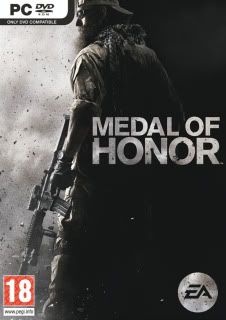
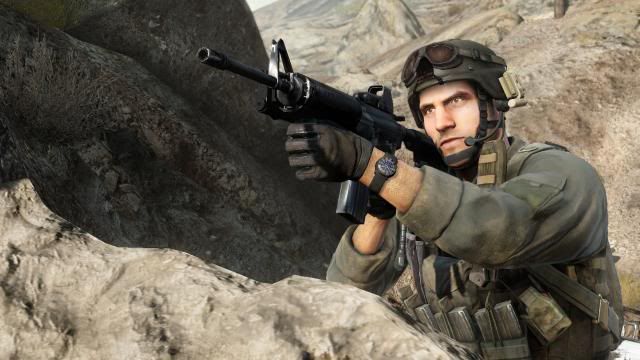
Medal of Honor is an upcoming first-person shooter video game in the Medal of Honor series, developed by EA Los Angeles and DICE, due for release on Microsoft Windows, PlayStation 3 and Xbox 360 October 12, 2010. The game will be a reboot of the series, set in modern-day Afghanistan during the 2001 War in Afghanistan. Medal of Honor's single-player campaign will use a heavily-modified version of Unreal Engine 3 and its multiplayer will use the Frostbite engine. This game is expected to utilize dedicated servers as hinted by Sean Decker, General Manager at EA, in Atomic PC's feature article.

At E3 2010, EA announced that a PlayStation 3 exclusive Special Edition would be released and will include a remastered version of 2002's Medal of Honor: Frontline.

Plot:

There will be one seamless single player campaign. The player will play as multiple characters that each partake in diverse and unique experiences from both the “Tier 1” and “Big Military” perspectives. The storyline will follow several "Tier One Operator" soldiers working under the National Command Authority in Afghanistan during the 2001 War in Afghanistan.Players will also step into the shoes of an Army Ranger and will fight on a larger scale than the "Tier 1 Elite Ops" campaign, as players will only be a small part of the 'war machine'. The campaign will be heavily weighted (with regards to playtime) in favor of the Tier 1 group.


Gameplay:

The emphasis will be on realism, with EA going as far as to bring in consultants from the United States military. It is expected to include the kinds of objectives and tasks issued in real life such as raiding terrorist hideouts, hostage rescues and undercover operations. The single player is set to include drivable vehicles such as helicopters, jeeps, and a quad bike.

Photobucket

Multiplayer:

Medal of Honor's multiplayer will be developed by EA Digital Illusions CE. Electronic Arts released multiplayer beta keys for the PS3 and PC on June 21, 2010. The Xbox 360 beta was initially delayed, but eventually opened on July 20, 2010.


Characters:

Spc. Dante Adams 1/75th Ranger RGT.

Cpt. Brad "Hawk" Hawkins Apache "Gunfighter"

"Rabbit" AFO Neptune Tier 1 Operator

"Deuce" AFO Wolfpack Tier 1 OperatorPlot


System requirements:

Processor: Pentium D 3.0GHz, Core 2 Duo 2.0GHz,Athlon X2

Memory: 2GB

Video Card: GeForce 7800 GT,ATI X1900

James Bond: Blood Stone

Posted by GameIsLyf Monday, July 19, 2010 0 comments


Developer(s): Bizarre Creations
n-Space (Nintendo DS)
Publisher(s): Activision
Writer(s): Bruce Feirstein
Composer(s): Richard Jacques
Series James Bond
Platform(s): Microsoft Windows, Nintendo DS, PlayStation 3, Xbox 360
Release date(s): Holiday 2010
Genre(s): Action-adventure
Mode(s): Single-player, multiplayer


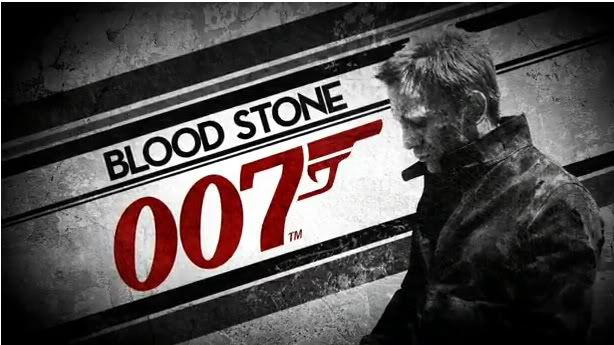
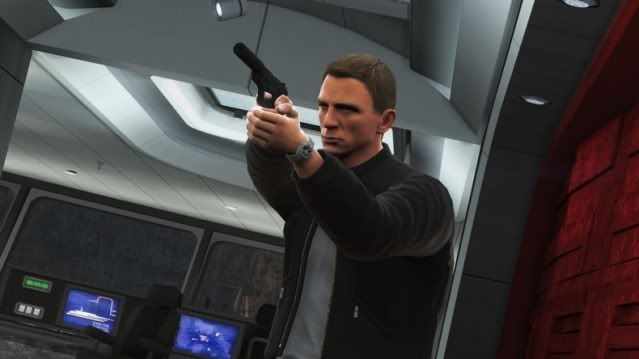
Blood Stone is an upcoming action-adventure video game, developed by Bizarre Creations and published by Activision for the Xbox 360, PlayStation 3, Nintendo DS, and Microsoft Windows operating systems. It is the 24th game in the James Bond series although it is not a direct sequel to any game. The game was confirmed by Activision on July 16, 2010. The game is expected to be released in the fourth quarter of 2010. It features the voices and likenesses of Daniel Craig, Judi Dench, and British artist Joss Stone.

Trailer:


Game play:

The game is a third-person shooter with elements of hand-to-hand combat. Blood Stone features a unique Focus Aim system which allows players to lock onto targets after melee takedowns. There is also a multiplayer mode consisting of up to 16 players that will pit spies versus mercenaries.
Plot
The player assumes the role of the protagonist James Bond (voiced by Daniel Craig) who teams up with wealthy socialite Nicole Hunter (voiced by Joss Stone) to find a researcher who is feared dead. Set across five locations: Athens, Istanbul, Monaco, Siberia and Bangkok, Bond fights the antagonists, a group of terrorists led by a man named Greco. The background of the story is an international conspiracy that has placed the U.K.'s most secretive biochemical weapon into the hands of an unknown enemy. From examination of the website, it is speculated that genetics, globalism, and diamonds will be pivotal themes to the story.

Development:

The game was first hinted on April 21, 2010 when British store HMV listed Blood Stone as coming soon.Then on April 23, Activision reserved a web domain name called bloodstonegame.com.The game was officially announced in an Activision press release on July 16.
Famed James Bond film writer Bruce Feirstein was chosen to pen the story for the game.
The game itself is built on developer Bizarre Creations' bespoke engine, which was first created for the game "The Club".
Ben Cooke, who is Daniel Craig's stunt double in the films, has provided the motion capture choreography for Bond's digital animation. He is credited as the game's Stunt Coordinator.


Music:
The soundtrack is composed by British composer Richard Jacques. Joss Stone provides an original musical track to the game titled, “I’ll Take It All” written and performed by her and Dave Stewart of the Eurythmics. The song will be featured exclusively in the game.


Last Words:


according to David G. Wilson, Bond Marketing's vice president of business strategy,Blood Stone isn't tied to a James Bond movie but follows an "original and topical storyline". This plot is a "completely new narrative with plot and characters in keeping with Bond heritage" and includes international terrorists, a terrorist suicide mission, and, judging from the title and diamond-encrusted opening credits (in familiar silhouetted Bond intro style), a quantity of jewels.
So lets wait till end of this 2010 to get the game to be released..so that we can try our hands on it. Keep checking this page for more updates.


DeathSpank

Posted by GameIsLyf Sunday, July 18, 2010 0 comments

Developer(s): Hothead Games Publisher(s): Electronic Arts Designer(s): Ron Gilbert Platform(s): Xbox 360, PlayStation 3
Release date(s): Xbox Live Arcade
July 14, 2010 PlayStation Network July 13, 2010
Genre(s): Action role-playing game
Mode(s): Single-player, local co-op Rating(s): ESRB: T

DeathSpank is an action role-playing game by game designer Ron Gilbert, who had been working on getting the game made since 2004; it was announced on January 9, 2008 that Hothead Games would publish the game. The game has been described as "Monkey Island meets Diablo". The game was released on July 13, 2010 on the PlayStation Network and July 14, 2010 on Xbox Live Arcade. Three teaser trailers of DeathSpank were shown at Penny Arcade Expo 2008, but did not show any gameplay. On March 30, 2009, Ron Gilbert confirmed on his blog that the game would no longer be episodic. During the '09 Penny Arcade Expo the game was showcased at Hothead Games booth, with live gameplay being demonstrated by staff, along with examples of story elements, and dialog trees.


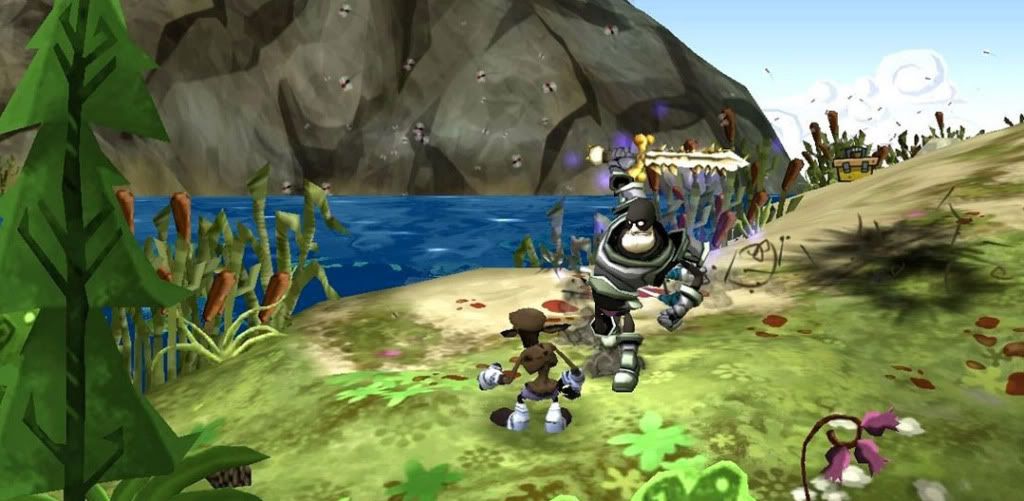
DeathSpank's world is cylinder shaped and is rendered without load screens as the player explores its unique goings-on. Gameplay is similar to Diablo, but with more customization, featuring hundreds of pieces of armor and weapons. Advanced dialog options, similar to LucasArts popular Monkey Island series also play a large part in unfolding the game's story. The game is being designed to be comfortable to play in short segments, ideal for more casual gamers, but also boasts over 15 hours of gameplay. Players also have the options of doing many side quests, and hunting for achievements.


The character DeathSpank originated in Ron Gilbert's Grumpy Gamer comics, created by Gilbert and Clayton Kauzlaric. The character was then later developed further. Gilbert and Kauzlaric created a rough design for the game and pitched it to games publishers for over four years without any success. Previously, Gilbert had consulted for Penny Arcade Adventures: On the Rain-Slick Precipice of Darkness at Hothead Games; he contacted them and a deal was made for the company to publish the game. A more in-depth design for DeathSpank was then produced. Kauzlaric remained involved with the project, consulting on design, story and concept art

DeathSpank was ultimately published by Electonics Arts. Gilbert departed Hothead Game

s upon completion of the game.

During the development of the game on its official blog it was announced that both EA and Hothead Games are very interested in delivering a PC version, and that further announcements would be made in the future. Since the entire blog has been removed it's uncertain if there will be a PC version. However Ron Gilbert, teased on his blog a few weeks before the release of DeathSpank on XBLA/PSN that there will be a version of the game for another platform in the future.

The character of 'Deathspank' is voiced by Michael Dobson.

Blacklight Tango Down

Posted by GameIsLyf 0 comments

Developer(s) Zombie Studios
Publisher(s) Ignition Entertainment
Designer(s) Mark Long, Jared Gerritzen
Writer(s) Mark Long, Jared Gerritzen, Ian Stephens, Cullen Gallagher, Erik Lieb, Jason Dean Hall
Engine Unreal Engine 3
Platform(s) Microsoft Windows, PlayStation 3 (PSN), Xbox 360 (XBLA)
Release date(s) Xbox 360
July 7, 2010
Microsoft Windows
July 14, 2010
PlayStation 3
August TBA
Mode(s) Cooperative modes, Multi-player
Rating(s) ESRB: T
Media Download
Input methods Gamepad, keyboard and mouse


Blacklight: Tango Down is a video game by Zombie Studios and published by Ignition Entertainment. The game was released on July 7, 2010 on Xbox 360 as a downloadable title, and will be released on Microsoft Windows on July 14. It is set to be released on the PlayStation 3 around six weeks after the Xbox 360's release.
Zombie is planning to make Blacklight a multimedia franchise that will include the video game, a feature film, and a trilogy of comic books. The idea was concepted by Zombie executives which later pitched the idea to several film and comic book production companies. The film rights were immediately bought by Fox Atomic to create a film adaptation of the franchise. Fox Atomic's comic subsidiary, Fox Atomic Comics, was also to be creating the Blacklight comics, but after the closing of Fox Atomic, the trans-media rights have been purchased by Imagine Entertainment.The film, comic books, and game will not share the same storylines, but tell different stories in the Blacklight universe at different time periods.


Gameplay

Blacklight: Tango Down is an online multiplayer first person shooter with an experience system similar to Call of Duty: Modern Warfare 2, yet very unique in its own ways. The game contains traditional modes such Deathmatch, Team Deathmatch, and Control Point, with other modes being announced in the build up to launch. The game makes use of its near-future setting by offering HRV (Hyper Reality Visor) that allow players to see through walls, and digi-grenades that counter other players' visors.

The game features an experience system lets the player rank up through 70 levels. Weapon customizations will unlock as the player gains skill and experience points and will include more basic add-ons like sniper scopes as well as more complex enhancements, such as improved accuracy. The weapon customization in Blacklight: Tango Down has the most customization features out of any First-Person Shooter.

System Requirements*
Intel Processor - Core 2 Duo E6700 2.66GHz
AMD Processor - Athlon 64 X2 Dual Core 6000+
Nvidia Graphics Card - Geforce 8800 GTS
ATI Graphics Card - Radeon HD 3800 series
RAM Memory - 2 GB
Hard Disk Space - 2 GB
Direct X - 9
* System requirements displayed are based on recommended system requirements and should be used as a guide onlt

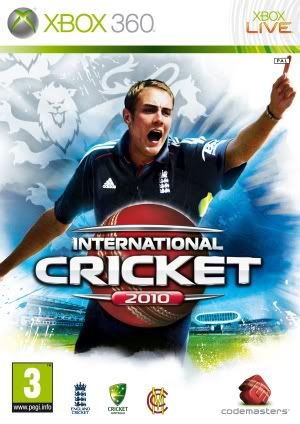
International Cricket 2010

Posted by GameIsLyf Friday, July 9, 2010 0 comments

Developer(s): Trickstar Games (PS3 and Xbox 360)
Publisher(s): Codemasters
Platform(s): PlayStation 3, Xbox 360
Release date(s): 18 June 2010 in England
October in Australia
Genre(s): Sports, Cricket
Mode(s): Single-player, Multi player, Online
Input methods: Gamepad

International Cricket 2010 is a cricket video game for Xbox 360 and Playstation 3. The game was developed by Codemasters and Trickstar Games, and was released in the United Kingdom on 18 June 2010 and sceduled to be released in Australia sometime during Q3 of 2010. It is the direct sequel to the 2009 release Ashes Cricket 2009.
The game is licensed by the England and Wales Cricket Board and Cricket Australia, and thus will include all the official players of the Australian cricket team and the England cricket team.[citation needed]
The game features an online mode, and a revolutionary Action Cam which provides an on-field view of play.
There is a new tournaments section with four new tournaments based on the big four limited overs contests – World 20 Overs (T20), 20 Overs Super League (T20), Champions Cup (ODI) and World Trophy (ODI).
There is an expanded roster of 16 international teams (Including Bermuda, Canada, the Netherlands, and Scotland) and players can choose between 21 stadiums from around the world(The 3 new stadiums are Dhaka, Grenada, and Port Elizabeth.)
There's only one sport making headlines at the moment. Eleven men taking on eleven men on a beautiful green pitch, with a ball playing a major part in proceedings. This isn't a video game based on that sport. This is Cricket 2010, released bizarrely smack bang in the middle of the football World Cup. With vuvuzelas blaring out from inside the stadiums in South Africa and on our streets here in England, has anyone even noticed that there's cricket going on too? Ironically, timing isn't Cricket 2010's strongpoint, and neither are excitement, presentation and polish.
A new Power Stick feature enables players to gain both 360 degree direction and power control.
A new "sportsmanship rating" feature will permit players to decide on a preferred online opponent, especially for avoiding players who quit matches when losing.
Batting:
When you are batting you've got so many of shot options, from off side drives to leg-side hooks, all dependent on the type of ball that's been delivered and whether you choose to play from the front or back foot. You can even opt to charge down the wicket to take on spin bowlers, smacking a lofted shot straight out the ground. Timing is the main thing, whether playing a defensive stroke or trying to hit a boundary, with an early or late swing of your bat often resulting in the losing your wicket or may be a lucky escape.

Fielding:
Fielding is again automated, with your control limited to pressing a button to catch the ball and deciding which end of the wicket you want to return the ball to. AI here isn't good, with players often slow to move and they'll frequently appeal for run outs despite the batsmen being safe.

Bowling:
When bowling the camera follows your player as he charges in before delivering the ball, but the view of your aiming reticule is severely hampered. With the broadcast camera you get a clear view of where you're aiming, but from the action cam it simply doesn't feel as accurate. With power determined by an on-screen meter, this isn't effected by the new camera. Pace bowlers can swing or cut the ball, while spinners can, well, apply various types of spin and drift the ball in the air. You can do more or less everything you'd want to be able to do, but it doesn't feel as though you have a huge amount of control.


Last words:
Cricket 2010 plays a good game of cricket, but the problem is the new camera, which brings with it as many negatives as it does positives, and the presentation is still severely lacking. Played with a friend over 20 overs it offers a fun way to spend an hour or so, but there's not enough depth here to keep cricket fans interested over long, drawn out Test Matches - especially when the football's on.


Crackdown 2

Posted by GameIsLyf 0 comments

Developer(s) Ruffian Games
Publisher(s) Microsoft Game Studios
Designer(s) Billy Thomson (Creative Director)
Steve Iannetta (Lead Designer)
Platform(s) Xbox 360
Release date(s) NA July 6, 2010[
EU July 9, 2010
AUS July 8, 2010
Genre(s) Sandbox style action TPS (Third person shooter)
Mode(s) Single-player, Multiplayer, Cooperative modes
Rating(s) BBFC: 15
ESRB: M
OFLC: MA15+
PEGI: 18
Media DVD-DL
Input methods Gamepad


Crackdown 2 is a sandbox-style third-person shooter video game developed by Ruffian Games and published by Microsoft Game Studios. It was released on Xbox 360 in July 2010 and is a direct sequel to the 2007 video game Crackdown.

Gameplay:

The game is modeled similarly to its predecessor Crackdown, a third-person shooter in open world game play. The player character is an advanced super-powered officer for the city-funded "Agency", known simply as the "Agent". This time around, increased levels of customization for the character are allowed, unlike the presets offered before. Along with that, the orbs from last time are coming back, but the powers are expanded and enhanced, i.e, the Agility Skill allows the Agent to jump higher than in Crackdown, and provides a 'dash' maneuver, as well as opening up a special helicopter.[citation needed] Driving is also a big portion of Crackdown 2, as in the first game. You’re able to commandeer any number of vehicles in the game, including police vehicles and other futuristic vehicles. The demo also provided a short look at some of the checkpoint races that fans would be able to check out within the city.Like Crackdown, the game will allow for on-line co-operative play in the main game, but will now support up to four players. The game will also feature competitive multiplayer modes for up to sixteen players.While the original Crackdown supported System Link playing for co-op, Crackdown 2 won't be featuring the same option. Microsoft Producer Peter Connelly stated. "It would've taken a half-day of work, for something that only a tiny percentage of gamers will ever use."[citation needed].
The player will fight both gangs of criminals and "freaks"-strange infected mutants. Both can be killed with melee attacks but different shooting strategies will be required for the different foes, normal guns for humans, custom-built uv guns for the non-humans. There are 5 skills to be leveled up,
Skill #1 is Agility, to obtain agility you go from rooftop to rooftop collecting agility orbs or by doing Rooftop races.
Skill #2 is your Firearms skill which is leveled up for using any sort of firearm (not including rocket launchers, or hand-hand weapons.
Skill #3 is the driving skill, which can be upgraded via killing enemies by running them over, racing, and collecting renegade orbs with your vehicle.
Skill #4 is the explosives skill which can only be upgraded by using rocket launchers and grenades.
Skill #5 is the strength skill which is upgraded by punching, kicking, bashing, and smashing with melee weapons like stop signs and street lights.


Graphics:

in the graphics department,there is not much different about Crackdown 2 when compared to Crackdown 1 . Pacific City is essentially the same city players visited in Crackdown 1 which while providing a sense of familiarity, also does nothing to foster a sense of wonder or discovery. New areas to explore would have been a welcome addition to the game, but alas no such luck. We felt that this seemed indicative of a tight release deadline combined with the temptation to cheaply reuse game assets from Crackdown 1 … all in all not very impressive in a title charging full retail. We couldn't help shake the feeling that Crackdown 2 felt more like an expansion pack rather than a full fledge title in its own right.

Last words:
The game still looks great, particularly when big explosions are happening in a massive firefight, but so did Crackdown 1. There is definitely more happening on the screen at once, particularly when engaged with a Freak horde, but the game still doesn't feel different enough from Crackdown 1.


Singularity

Posted by GameIsLyf Thursday, July 8, 2010 0 comments


Developer(s): Raven Software
Publisher(s): Activision
Engine: Unreal Engine 3
Platform(s): Microsoft Windows, Xbox 360, PlayStation 3
Release date(s): June 29, 2010
Genre(s): First-person shooter, science fiction
Mode(s): Single-player, multiplayer
Rating(s): BBFC: 18
ESRB: M
PEGI: 18+
Media: Blu-ray Disc, DVD
Input methods: Keyboard and mouse, gamepad

Singularity is a video game developed by Raven Software published by Activision and released for Microsoft Windows, Xbox 360, and PlayStation 3, Singularity is Raven Software's second title based on Epic Games' Unreal Engine 3. The title was announced at Activision's E3 2008 press conference.
The game takes place on a mysterious island known as "Katorga-12" where Russian experiments involving "E99" took place during the height of the Cold War era. Sometime during 1955, a terrible catastrophe known as the "Singularity" occurred on the island, causing the island's very existence to be covered up by the Russian government. The player controls Nate Renko, a Black Ops soldier who is sent to investigate bizarre radiation emissions coming from the island, only to crash land there. After regaining consciousness, Nate finds the TMD (Time Manipulation Device) and discovers that the island is constantly shifting between the time periods of 1955 and 2010. He also encounters Victor Barisov, the scientist in charge of the Katorga-12 experiments who reveals that a man named Nikolai Demichev is on the island to try to restart them on a much larger scale, which could cause an unthinkable disaster. During the quest to stop Demichev, the player will have to deal with hostile Russian forces in both time periods, and the hideously mutated flora, fauna and former residents of the island, some of which have developed time manipulation power of their own.


Gameplay:

Singularity's main gameplay device is an artifact known in the game as the TMD (Time Manipulation Device). This device is powered by a very small E-99 core, and can manipulate timespace on a virtually limitless scale. The TMD can move an object backwards or forwards in time, attract something and hold it indefinitely, or send a pulse of energy that can stun or even kill enemies. The only weakness is that the TMD powers can be applied only to living beings or objects that have been in contact with E-99 (supposedly, almost everything on Katorga-12 is imbued with the element, but in practice, the TMD can only affect a limited set of objects like certain types of crates, tape recorders, barrels etc.). Some living beings, like the Spetsnaz Elite troopers who are covered in a heavy armor designed to repel E-99, are immune as well.
The TMD can also be used in conjunction with special power stations scattered across the island that greatly amplify its power. In some instances, the player can use this to restore entire ruined buildings or wrecked ships to their pristine state in order to progress. However, these major alterations are highly unstable and will begin to revert almost immediately, forcing the player to dash through the restored structures as they start to decay and collapse around him.


Last Words:

The downside, the upgrade systems for weapon and player are a bit perfunctory, although good enough to keep you ticking along. Also, like almost every FPS game ever made, there are times that you become acutely aware that you're running down a long mazy corridor with fireworks in it, spending a disproportionate amount of time collecting shiny objects. And some of the enemies are slightly annoying, like the knee-high exploding spider things.
Singularity has more to recommend it than simply being a polished, entertaining collection of well-executed clichés and set-pieces. It's the first game I've played in ages that realises first-person shooters can bundle in as much philosophy and as many moral dilemmas as they like, but fundamentally they're still about shooting monsters in the face, and so what it lacks in originality it makes up for in variety, pacing and exuberance. First-person shooters are always silly! Well done to Raven for making one that likes being silly.

Alpha Protocol

Posted by GameIsLyf Tuesday, June 29, 2010 0 comments

Developer(s): Obsidian Entertainment
Publisher(s): Sega
Designer(s): Chris Parker (Project Director), Chris Avellone (Lead Designer)
Composer(s): BT, Rod Abernethy, Jason Graves, Alexander Brandon
Engine: Unreal Engine 3
Platform(s): Microsoft Windows
, PlayStation 3, Xbox 360
Release date(s): EU May 28, 2010
NA June 1, 2010
Genre(s): Action RPG
Mode(s): Single-player

Rating(s): BBFC: 15
ESRB: M PEGI: 18+ USK: 16
Media: Blu-ray Disc, DVD-DL

Alpha Protocol is a third-person espionage role-playing video game, developed by Obsidian Entertainment and published by Sega. The game revolves around the adventures of field agent Michael Thorton. The game was originally set to be released on October 27, 2009, but the release was pushed back to May 27 (Australia), May 28 (Europe) and June 1, 2010 (North America).
In the world of espionage, nothing is as it seems in Obsidian Entertainment's blockbuster role-playing game (RPG) thriller Alpha Protocol.

Assume the role of Michael Thorton, a highly skilled government operative trained to eliminate threats to national security.

When a mission goes horribly wrong, Thorton is the only one with the information, skills, and audacity to stop an impending international catastrophe. To do so, he will utilize the very government directive that the enemy sought to use against him--Alpha Protocol.

Set in the modern day, Alpha Protocol gives you complete control not only of Thorton's actions but also of his personality and attitude, all of which will determine the future of the world as we know it.

Blending fast-paced modern combat, significant character advancement, and innovative RPG features, Alpha Protocol brings a fresh new perspective to the genre.

Gameplay

Combat:
Alpha Protocol is played from a third-person perspective, allowing the player to see Thorton and his surroundings at all times. As Thorton is a trained CIA operative, the tools at the player's disposal include numerous firearms, hand to hand combat using Kenpo, and spy gadgets.

In addition to the action elements, players also earn Advancement Points, which can be placed into any of the ten different skills in the game. These skills will increase Thorton's ability to use certain weapons and grant different abilities to him. These abilities are free to use, but require a "cooldown" period before they can be used again. One ability that has been mentioned in previews allows Thorton to scan a group of enemies in slow-motion before popping out of cover and shooting each of them more rapidly than he would be capable of normally.


Dialogue system:
At the heart of Alpha Protocol is the Dialogue System. This screen shows a typical dialogue sequence players use to decide their progress.

Alpha Protocol features numerous characters with whom to interact. Conversations occur in real-time, giving the player a limited amount of time to respond at key "decision points" during dialogue. The dialog system in the game - known as the "DSS" or Dialogue Stance system - allows the player to choose from three different attitudes, or "stances," when speaking to an NPC. Obsidian has said that these options are based on the personalities of the "three J.B.'s": Jason Bourne of the Bourne Identity novels and films, James Bond of the eponymous film and book series, and Jack Bauer of the television series 24, although the game itself does not use these names. During dialog sequences, the player will be able to choose from options like "professional" (Jason Bourne), "suave" (James Bond), and "aggressive" (Jack Bauer), sometimes with a brief description of the dialogue choice (such as "sarcastic") taking the place of the general stance. A fourth, "action" dialogue choice is sometimes available, used to terminate a conversation prematurely. Each NPC will react differently to these choices; one character might be intimidated by an aggressive stance, but another character may find an aggressive stance to be insulting or childish. While dialogue choices will have some immediately noticeable consequences, many may not be seen until much later in game. As each conversation is experienced once per playthrough, multiple playthroughs will be required in order to experience all of the game's content; while the game contains a total of approximately twelve hours of cinematic sequences, a player will only experience around four hours during any given playthrough.

Structure:
Alpha Protocol has a hub structure, in which Thorton must utilize safe houses in each of his hub cities in order to lay low between missions. From a safe house, Thorton can change clothing, access a weapons locker, telephone contacts, and attempt missions. Some missions are critical to the progression of the story, while others are optional. Players will be able to buy and sell weapons and equipment within their safe houses. Hub cities include Rome, Moscow, Taipei and a city inside Saudi Arabia.


Customization:
Players can customize Michael's headwear, facial hair, hairstyle, eye color and eye wear.

Choice of weaponry is very important to how a character approaches combat; you can only bring two weapons into the field at once. Pistols are weaker and shorter-ranged but they and Assault Rifles are the only two classes capable of precision shots, and only Pistols can be silenced for stealth characters or use tranquilizer rounds for characters interested in firing their guns but not killing their targets. Assault Rifles do more damage and have longer range, but lack the ability to be silenced except by using expensive and rare subsonic ammunition. Shotguns and SMGs are good at short range; while the Shotgun user can charge up for a critical hit to knock an enemy down, the SMG user gains a damage increase as more of his shots hit targets in a short time.

Weapons can be customized by placing modification items in one of the four slots: the barrel, the scope, the magazine, and the accessory slot. Just like your choice of models for a given weapon type, these modifications can have both positive and negative effects on the weapon's attributes: Damage, Accuracy, Recoil Control, Stability, and Magazine size.

Characters can also choose and customize their armor. The main function of armor is to provide Endurance – a pool of regenerating hit points – to Thorton, but different suits can instead specialize in stealth or increasing the amount of gadgets Thorton can carry in his inventory.

The player can choose also which skills to advance, allowing them to reinforce their play style. The character can advance skills which make him kill his enemies better (Pistol, Assault Rifle, Shotgun, Submachine Gun, Martial Arts) each with their own play style, make him better with his gadgets (Sabotage), harder to kill (Toughness) or spot (Stealth), or provide miscellaneous benefits (Technical Aptitude).

Music:
The theme to Alpha Protocol was written by electronic producer and artist Brian Wayne Transeau, better known by his stage name, BT.

Minimum System Requirements

OS: Windows XP (Service Pack 2)
Processor 2.66GHz (Intel Pentium) or Athlon XP 2400+(AMD)
Memory: 2 GB RAM
Hard Drive: 12 GB available hard drive space
Video Card (graphics): DirectX 9.1, Pixel Shader 3.0 and 256 MB (i.e. GeForce 7900 or ATI 1800)
Sound: DirectX 9.1 compatible
Control: Keyboard, Mouse

Recommended System Requirements

OS: Windows XP or Vista
Processor: 3.0 GHz Dual Core CPU / Athlon 64 X2 Dual Core 5600+ (or better)
Memory: 2 GB RAM
Hard Drive: 12 GB available hard drive space
Video Card (graphics): DirectX 9.1, Pixel Shader 3.0 and 512 MB (i.e. GeForce 8800 or ATI Radeon HD 2900)
Sound: DirectX 9.1 compatible
Control: Keyboard, Mouse

Search Game is lyf's database

Loading